Showing posts with label Faith. Show all posts

Monday, May 23, 2016

My Neuro Psychologist says that the majority of brain injury patients fall into depression – after their therapists have given them the go-ahead to return to “normal” life, that they are now free to live their lives without having their weeks plotted out for them and mailed to them on a rotation anymore. Instead of being happy, they are deeply depressed.
“And why’s that?” I recall asking.
Being a shrink, he gave the question back to me: “Why do you think that is?” Because, you know, my answer is more relevant than his facts. How I see it, what I think of it, lends insight into how I would feel.
I imagined it must be because it was easier for them not to have responsibility for their own lives, which were being dictated for them on a daily basis. Now they were on their own, they would fail or succeed by their own merits. Maybe I wasn’t ready to be done myself, maybe after two years I was dependent on them after all.
But today was my last “Family” Meeting at the brain rehabilitation center, and I can tell you right now how I’m going to be feeling in the coming weeks:

A.) Relieved to have my own life back.
B.) Disappointed that for some reason I have been thinking for the past couple of years that when the therapists moved out my life could pick up again right where I left off. No one promised me that, but I’m pretty sure they did promise more than what I’ve got.
C.) Wishing things could have happened differently. Wanting to bargain with somebody somewhere in the past – What if I had been more aggressive about getting the level of therapy I really needed? What if they had gotten me into Occupational Therapy sooner? What if I’d had some kind of case manager who could have helped me to get those things done?
D.) Angry because there are things that I’m always going to struggle with. Angry because I want to be like everyone else and skip the naps and burn the candle at both ends and push my way up to the top of the heap.
E.) Guilty for not being grateful enough for all the things I have, for remembering with every breath that I am alive, and that is all that matters.
F.) Wanting really badly to just forget that the whole thing ever happened, to pretend that I’ve always been here and always been this way, and I’m okay with that, I’m doing fine, I don’t want for anything. The bills are being paid and there is food in the house, I have my bus transportation and my friends here – I don’t need anything more.
G.) Daring to hope. Always at the end of everything bad, down at the bottom of a great big pile of bad, always I’m looking for the hope therein. I think of what a beautiful world this is, what wonderful kids I have, how much I love my family, how much I love Dennis, my friends. How I still have a lot to say in life. I’m not teaching in a classroom, but there’s something shining inside that I have got to share with others, and I can still do that in writing, in painting – in how I love others.

My sister wasn’t able to be at the meeting this time around, but she sent an email that pretty much summed things up: “…My understanding is that this will be the last family meeting at that you are all done treating Heather. Please let me know if Heather's interpretation of the situation is incorrect. I wanted to thank you and your staff for all the hard work you've put into Heather's rehabilitation. It's been a long and interesting process and I've been happy to help as soon as I realized how involved I needed to be. It's been very educational. I also just wanted to make sure that I understand where Heather is and what will be needed for her from here out. There are a lot of skills and steps that Heather has progressed with through the combined efforts of [you, and Heather’s] Tuesday group. Obviously this list isn't exhaustive, but off of the top of my head: · Speech and conversational skills · Information Processing · Memory and scheduling compensational skills · Physical exhaustion management · Surviving relatively independently · Initiating an application for social security · Transportation · Neural fatigue management · Accepting changes to her quality of life (ongoing)
“Obviously Heather could not recover to her full capacity from before the accident, so things that she will continue to struggle with and hopefully improve on include: · Neural fatigue (which leads to greater problems managing even skills that she is typically doing well with) · Information Processing · Problem solving · Sleep hygiene · Medication management · Scheduling and memory compensation · Budgeting · Driving skills
“Things that she is currently unable to do include: · Drive at all other than the 15 minutes from her home to work · Complete more than roughly 4 hours of work a day · Manage a day successfully without a nap in the middle of the day · Complete her masters degree in education · Work in a classroom · Work in a fast-paced position · Work without compensation for her disability
“Questions that I still have include: · Will you provide a therapy wrap up/release statement that details her capabilities? o Heather's understanding was that she could contact your offices whenever she needed a statement for Social Security, housing, food stamp, and other considerations. Is that accurate? What kind of turn around can she expect when she needs something like that? · What happens if she moves, or changes jobs? o Will she need further driving instruction? o Will she need further vocational therapy? o Where can she get further therapy if she moves away from Lansing? o Could she get a referral? I might have more questions that I haven't thought of yet. but this is basically what I would have brought to a family meeting were I able to attend. Once again with sincere thanks...”

Judging by what I understood from the meeting, Thea wasn’t wrong in her assessment of my situation. Origami is signing off. The Vocational Therapist will touch base with me a couple of times within the next couple of months to help with the transition between my old boss and my new boss (There’s actually kind of like a whole committee of bosses, who fortunately are going to be sticking around to help as well). I am by all reports doing well in the quiet, organized atmosphere with the routine schedule (Unless I’m overtired, which is when all bets are off regardless of what I’m doing).

“Heather, we have discussed that you might be able to work a couple of extra hours if you were to have a more repetitive job, but you have expressed concern that you might not be challenged enough by such a job and, frankly, I would have a really hard time with a job like that myself. If you were to change jobs at some point in the future, know that I’m always here for you if you need me. Meanwhile, I’m happy to see that you have finally been contacted by the social security administration regarding your claim, as you will need to be compensated for the work that you are no longer able to do. Although they do usually turn everyone down initially, I think you have a good case with them, given the extremely debilitating effects that neuro fatigue still has on you after two years of recovery.”
The Occupational Therapist then listed things that she feels I am doing well. Since January (when we had our last meeting) and now, I have transitioned into independent housing and am caring for my children relatively well. “And we have a new system in which Heather is keeping her weekly grocery money in envelopes so that she can keep track of her spending and also use the checking account solely for bill paying purposes. So, Heather, how’s that going so far?”

“Um… I lost the envelopes.”
“…and we implemented a new pill reminder system so that she will stop forgetting to take her pills…”
“It’s kind of working – I only missed them twice last week…”
“Well, ANYway, Heather is probably always going to struggle with budgeting, sequencing, organizing, problem-solving when there are sudden changes in her plans or schedule. Rest breaks and time management are always going to be the key to her success in any endeavor. I estimate that we should be done within the next two weeks.”

Why am I so organized at work and not at home? Because I get the great privilege of working first thing in the morning, when my brain is working to its fullest capacity. Also, work has a built-in schedule, tasks that are the same from week to week, and people who worry that things won’t get done, or notice when things don’t get done, and are sure to remind me. In other words, I have the same level of supervision as I did when I lived with Thea and Paul. More. And the bonus is that I actually get paid for doing this stuff, which surprisingly I really enjoy doing. I think it’s because I love people and helping people out, and there are enough creative things to do to keep that side of me satisfied as well.
But I sat at the meeting and marveled at how I could have been just a few classes short of a master’s degree in teaching just a couple of years ago, working full time and considering a job teaching online -- and now I’m weighing the pros and cons of a part time office job over an assembly line job at a factory. With no one but myself foreseeing my ability to do much more in the future.
The medical doctor from the rehab who has been prescribing my treatment told me at the meeting that they are all very proud of how far I’ve progressed, that they would write up a summary of what I have done and what their recommendations will be for my future. She explained that sadly they had not gotten a report back from the driving inspector regarding my future at the wheel yet, but that in the meantime my family should be compensated for helping me go back and forth to pick up Stuart and Lucy for the weekends, and in the future the auto insurance company is still obligated to cover any travel I need to brain-related medical appointments or therapies. The brain rehab will contact me via email when they get further information regarding the driving issue. If I have any further brain-related problems in the future, they are, of course, always there for me... I just have to get a referral from a medical doctor before approaching them.
Now that they are closing shop, it's probably too late for my Neuro Psychologist’s Office to get further therapy for me. He had said that I needed it, and had told me several times that he had sent the recommendation to the new doctor and therapy program he wanted for me (that he felt would be better than what I actually got), but even with his referral and several phone calls on my part, nothing ever came of that in time to be of any use to me. I mean, what are the chances that the auto company, after finding out they are all done paying for my brain treatment, are going to welcome more payments toward an all new therapy program for me? Certainly not after getting the report from the brain rehabilitation folks stating that my therapy is finished and that I am doing the best that I can do now.
That’s it.
It is kind of depressing, isn't it?
I'm not sure anymore if ANY therapy was really ever going to end with any kind of peace or sense of closure -- Maybe I could have gotten OT sooner and would be further along (the neuro psychologist thought so), but regardless I'm still stuck unable to do the things that I used to do, or to live the life I planned and spent thousands in college to achieve. There's no way this was ever going to be a happy conclusion... Except that I do love my current job, still get to paint and to write, and if I can master my fatigue and time management, I now have more time to do those things.

Maybe it was the only way that was ever going to happen, and maybe that's what I can look at as the reason behind it all. I am not one of those people who really believes that everything happens for a reason -- sometimes bad things happen, and they are random, and they will never make any sense. The “reason” isn’t the important thing, but my reaction is. Writing and painting have been my calling since a very young age, and somehow, despite all the distractions and sincere efforts to do other things that seemed more practical at the time, these are what I have left in me that I can still do without any doubt or question.
It’s all still up to me, and always has been.
That’s not depressing at all.

Saturday, October 10, 2015

"Hope is a Thing With Feathers"

The first week in October is National Mental Health Awareness Week. That's important because there is such a terrible stigma around what in essence is simply a medical condition. According to the International weekly journal of science, "more than 350 million people are affected by depression, making it one of the most common disorders in the world." 

A couple of years ago I had such "an acute psychiatric crisis" that I ended up living for two weeks in what they call a "Crisis Unit." Frankly, the Crisis Unit is where you go if you are suicidal. I have PTSD. Something triggered it and I didn't feel safe, even from myself. 

I made it through that terrible time because my family loves me, and because my children need me. Of course those things. But also because I was finally ready to love and need myself. 

While I was "locked up," I painted this picture. I posted it on Facebook, and a lot of people loved it. Most of you didn't know that I was suffering because I was ashamed of it and didn't want anyone to know. People who don't experience depression find it almost impossible to comprehend, and that's one of the reasons people blow it off or try not to talk about it. We don't pretend AIDS doesn't exist just because we don't have it. 
People don't get help for depression and other serious mental illnesses because they are afraid of what others will think, or how it will make them look in the eyes of their employer or their family, and their fear can literally kill them. 
People also don't get help because they simply cannot pay for the treatment, because health insurance in this country doesn't cover "Mental" health. It should. We should remove the "quotes" from around this word. People are dying from these types of illnesses simply because they have gone too long untreated. 


I went into the Crisis Unit because my life seemed like a cycle of pain that was never going to get any better. But I got better, and so I painted a picture about hope, about how someone can still sing even while in the fire just so long as they have reason to believe that things can and will improve if they only stick around long enough to find out. 
Today I am a happier and person for having gone through that experience without trying to "tough it out" completely alone. I allowed people to help me even as I feared to expose how completely empty and worthless I felt about myself at that time.
And I am a stronger person, too, in allowing myself to be so vulnerable in the face of that stigma. That's something I think not everyone realizes -- That in exposing your weakness you show great courage and strength. 

I hope I can be "real" about what happened to me without being judged, but I've reached a point where I'm going to just be real anyway. Maybe if you're suffering right now, you will feel less alone knowing that I've been there too, or that I care if you're going through a hard time. Whatever you do, don't be afraid or ashamed to bring it up on a public forum. You could potentially break a cycle of shallow, surface socializing that so many of us complain of but not enough of us do anything about. You have my support.

Thursday, September 17, 2015

The Corey Project

She was beautiful, smart, funny, friendly, and kind. She was in theater. She loved Dr. Who and ugly sweaters. She was creative and artistic -- unique. Meeting Corey was like meeting her mother from thirty years ago.
It's funny how, when you try to measure time by a specific memory, it always seems as if you've gone through a wormhole and skipped a few decades. The years speed past us, leave us wondering where they'd all gone to in such a hurry.
It seems like one day Corey's mother and I reconnected on Facebook, and in the next moment Corey's Senior pictures were posted on her proud mother's wall.

And then Corey was gone.
Her passing rent a great, gaping hole in the fabric of our universe, the balance of our world. I like to think of her knocking around in some alternate universe with The Doctor, with lots of planets and people to save. A good mother's child is generally a good child, and I know no better source of compassion than to have a kind and understanding mother. So Corey, she will be very kind, and clever, and brighten the very souls of every living being she meets. But in this universe, there is still that empty hole, and what do we do with that?

Corey would want us to fill it.

And so I find myself with a whole awful lot of running to do.
Corey was seventeen when she died, as she will always be in my memory.
And in the heart and memories of her mother, Corey will always exist as the infant, the toddler, the elementary student, and the happy teenager. For her mother there was so much more to lose. As each memory, each anniversary, each holiday and every birthday without Corey multiplies in the two years since her death, I know another little piece of her mother's heart gets torn fresh. It's hard to know how to comfort someone when they have lost their only child. I heard or read somewhere that Rose Kennedy, upon asked about her sons' deaths, said something about how unnatural it is for a parent to outlive their children, and that's a level of pain I can not fully even comprehend.
I think of how much it hurt when my ex-husband got physical custody of my children because I had no home to take them to, how the pain was so bad that I scarcely got through it alive. But to lose them altogether?
I think back to the days after I had to give them up, to the unnatural quiet in the house, to the empty rooms and unused toys mocking me every time I walked past their doorways, and most of all just how pointless my life had become all of a sudden. It had revolved around them, and now it felt as if there was nothing. I remembered I cried. I screamed at the relentlessly cold universe.
But I still had my children to live for. And this is the thing not everyone understands about being a mother, being a parent: You are always a mother (or father), whether your children are with you or not. I hadn't lost them, and I was still their mother. They needed me to figure out a way to live, and to thrive, so that someday I could show them how. You will always carry your children with you, in your heart and in your head. They're in your face and they're in the sounds, sights, and smells that accompany every day of your life.
"Lucy loves that flavor of ice cream."
"I remember when I watched this with Stuart; He cracked up at that part."
"That sounds like Lucy's laugh."
"I haven't been on this street since that time Stuart fell and skinned his knee. He carried on so much you'd have thought he was going to die..."

It was Corey's Mom who started it, my cherished childhood friend. At Christmas she mailed me a card and a packet of smaller-sized business cards with encouraging messages on them, to hand out to random people I meet, especially anyone who worked a thankless job, seemed in any way sad, or simply because my heart wordlessly led me to them.
Because Corey's mother still has her daughter to live for, as she will always carry her with her, always see and feel and hear her with all of her senses, all of her memories, because their hearts and minds connected in a way that only a mother can know.  In this sense, Corey has not left us at all. How much the rest of us mothers take for granted! All the little things that could at any moment be subtracted and replaced by a huge hole.
One thing I learned being without my children was that there are a lot of these holes out there in this tired, cynical old world, more than any one person could ever fill. 
But as Corey's mother, my friend had to do what Corey would have done.
In August, she challenged her Facebook friends to come up with seventeen acts of kindness, one for each year of Corey's life. If enough of us did that, those little good deeds would add up to something like the number of things Corey might have done, or would have us to do.

I promised that I would meet that challenge, and set out to work at it. I don't need accolades for anything I came up with; I didn't do them for that. I'm writing because I promised Corey's Mom that I would share these things with her, and then later it seemed that as many people as possible ought to know, and to do at least one small kindness -- for Corey.

My first kindness with Corey in mind was for a man I met at work who had served our country in Saudi Arabia. He had done his duty and then returned to the states using a walker, which he has had to use ever since. He was one of the nicest men I have ever met, and I think Corey would have liked his quirky sense of humor his liberal-mindedness, and what a really good artist he was. 
While I stuck to coloring mandala coloring books between calls  at the center where we both worked, David created scenes and stories with pictures he drew from memory -- A place he'd once lived, a man he once knew, a soldier, a desert -- This sailboat, which he gave to me on my last day at work. While I had an expensive set of 72 watercolor pencils, David worked with three #2 pencils, a couple of highlighters, three colored pencils in primary colors, and a charcoal pencil. He often stopped at my desk and told me how much he envied me my fancy "art kit," so I decided to go out and buy him a set of his own. I was curious to see what he'd do if he had a wider range of colors and a better quality pencil. The plan was to leave the pencils at his desk on my last day at work, so that I could slip out without having to endure the embarrassment of a "Thank you." I don't know why they make me feel that way, but they do. I want to do something really nice, but I don't necessarily want to be complimented for it. Go ask Freud.

One day David got to work three hours late, looking harried and upset. 
"What happened to you?" I asked, feeling that vague but fearful empathy of not knowing more than the expression on someone's face.
"I had an appointment at the VA hospital this morning," said David grimly, "The appointment was at nine, but I just got back."
I checked the time on my monitor. Three-thirty.
David was about to elaborate, but it was time for an impromptu meeting that had been called. Everyone shuffled out for the conference room and settled in, a buzz in the air about how this was the time of year when the call center started laying people off. We were all there on time, but the person from Human Resources was late, so David continued his story: 
"I stood there in line for awhile, but then had to take a number and go sit in the waiting area. It was like they just forgot about me. Three hours later, when I went to ask the lady at the desk what the hold-up was because I had to get to work, she looked at me like I was trash and accused me of being some kind of a problem. She said, 'Maybe if you had any kind of patience people would actually want to help you. You need to go sit down.' And it was like someone was going to escort me out of there if I said another word."
"Wow," I said. "It's terrible how they can spend so much money to send soldiers out to die for this country, but then they can't come up with better services for people after they've come home."
"You're telling me," he said glumly.
"If it isn't too much to ask -- What did you have to go in for?"
"My eyes," he said, "I noticed some blurriness, and I thought that it was just that I needed a new prescription, but turns out I've got cataracts."
I didn't get a chance to do more than shake my head before the meeting started, and it turned out people were right -- Tomorrow was our last day.
David had been hoping he could stay on because it was the only job he knew of available to him.
I had already interviewed for another one and gotten it, so I was only sorry for his sake.
Corey didn't have to nudge me very hard.
The next day, when David came back from his break, I was on the phone with a customer, but I listened nervously for a reaction. 
There was a box of 150 colored pencils sitting on his desk.
I heard the box open, and the sound of him riffling his fingers through them all. He settled himself into his chair, paused, and then I heard the gentle rustle of paper as he unfolded his note. After a few minutes of silence, I heard him draw in a deep, sniffling breath, and then release it. 
It occurred to me that this had actually all been a terrible mistake, that the man still had four more hours of work to go, talking on the phone with one customer after another, fighting back tears.
I hung up my phone.
David tapped my shoulder, so I swiveled my chair around to face him. 
"Did you do this?" he asked solemnly.
Sensing some strong emotions, I was almost afraid to nod my head. David clutched the note to his heart and mouthed "THANK YOU!" through his tears.
And then all I could do in return is mouth the words, "You're welcome," because I felt as if I might start crying myself. 
"She was her only child?" he asked. 
I nodded again. I'd been worried about what I might do if he were too proud to accept the gift, so I'd written explaining that the pencils weren't from me, that they had nothing to do with me at all. 
The next day, he came in and told me "You made my wife cry with what you did."
As a general rule, I don't think it's a good thing to make someone else cry, but the way he said it expressed further gratitude and a desire to let me know what a profound thing had taken place here. In David's smile and the warmth of his voice, I felt something more than just a "little" act of kindness, and that as soon as they could do so, the couple would pass that kindness on to somebody else. David would be sure to explain that it was for Corey.

We tend to get caught up in the idea that doing something important for someone else requires a lot of time, work and money. It's overwhelming how big we think it has to be when we reach out toward another person. I didn't have time or money, and simply doing my job from day to day was exhausting, so I'd had to come up with something more manageable. But how many acts of kindness does it take to fully represent seventeen years of life? Some of the things I thought of were things I know I would have done anyway, just little things, but it was kind of nice to think of myself as having Corey for a partner in this venture. I would stop and consciously try to decide 'How can I brighten the day, or maybe just one important little moment of the life of the average Joe out on the street?" What would the creative, thoughtful young woman have chosen to do?

And so Corey...
  1. Gave me a pat on the back for helping David and then pressed me to move on, to
  2. send a special picture to another of my grieving friends,
  3. Give a painting to another of my friends who was worried about losing her job,
  4. had me tell my daughter Lucy all about her and the project she had me working on, and how I could use some help carrying out her work.
  5. helped us come up with the idea of donating money to a dying child around Lucy's age who wanted to swim with the dolphins,
  6. pressed us to help someone clean up a mess that wasn't actually any concern of our own,
  7. told the man washing the windows at the restaurant that he was doing a beautiful job helping us to see the flowers, and he was so pleased and astonished that we were pretty sure no one had ever taken the time to tell him before,
  8. which prompted us to stop and make contact with every janitor we came across, to really see them and tell them how much we appreciated their hard work,
  9. had us read a story to a crying child in a waiting room until the little girl laughed instead,
  10. found something special for me to post on the wall of each of my Facebook friends, one for every day of the month,
  11. made certain that I stopped and stooped down to pick up litter wherever I walked outside that month,
  12. helped me contrive something nice to do for my mom on her birthday by cajoling one of my rides to stop at Meijer for us to buy her a cake,
  13. had us talk to people in waiting rooms about the lives of their families and their friends instead of staring down at my phone,
  14. reminded me to slow down for the rest of the  summertime I had with Stuart and Lucy, and work extra hard to look them in the eyes, listen to what they had to say, and then find the right responses,
  15. Gave my boyfriend a little shove to help an elderly woman get something off the top shelf at the store instead of standing there muttering to himself about her being in our way,
  16. encouraged me to leave my phone downstairs, on mute or in silent mode, and instead of feeling badly about our time together not seeming long enough and not being ideal, focusing instead on the quality of the time that we had left.
  17. and asked me to stop feeling badly about myself when the kids were away, stop focusing on the hole I felt inside myself, and instead to spend that time apart from my children filling in holes in the hearts of others.
I had set about trying to heal the world's hurts 
one person, 
one small act of kindness 
at a time.

And I discovered
 that there is no "small" act of kindness.

Corey taught me that.


Thursday, October 2, 2014

What I'll Focus On

Today I decided that I'm done with brain damage.
If I step back and try to look objectively at my circumstances, there's only three things that are actually a serious challenge. These are:


  1. I don't know if I can drive safely right now, and I no longer am sure if the insurance company will pay for my transportation. It's the same old song, different verse so far as Mild Traumatic Brain Injury is concerned: Physically I'm fine; My brain is just damaged. No biggie.
  2. My attention span and working memory are in the 23rd Percentile and I'm not used to having to work so hard to pay attention to everything.
  3. The neural fatigue is still very difficult for me to predict and adjust to. I'm not used to being so tired so suddenly that I literally can't hold my head up and my eyes open. I have to learn what types of physical activities bring this on, and what types of mental activities bring it on, and then I can plan for resting before and after those types of activities. I don't have to give them up, I just have to plan for them.
  4. The Vocational Therapist seems to feel it's unrealistic for my goal to still be getting to teach in a classroom. That's the most depressing thing of all.
The part that is not so serious is mostly my ego, and consists of the following:
  1. I miss my independence, having a car, and calling all my own shots as opposed to having to get called to the carpet every time I overdo. And I don't care for the way some people are judging me just because they don't understand what's happened to me, or don't know who I really am. 
  2. I now have the kind of attention span that as a teacher always made me want to rip my hair out or ask the student if they planned on learning anything today or if they were just going to sit around calling out unrelated comments that had nothing to do with my lesson plan. I am now that kid.
  3. I don't wanna have to take a nap every time I want get to do something! Waaaah! I don't want to have this problem. I don't want to have to micromanage every day for the rest of my life to ensure my brain doesn't shut down and start running on just the generators. I am sick and tired of talking and thinking about all my deficits. Education and acceptance are all very well, but at some point this needs to be about my strengths.
  4. I've spent a lot of time and money working on being the best the teaching field has to offer, and I don't want to see that wasted. But I don't know who to believe when it comes to my chances of winning this battle, so I sometimes wonder if I should just defer to the experts and find some nice, steady factory job that doesn't challenge me too much. 
In the name of concentrating on my strengths, I have decided to set myself back to default mode and proactively discuss my options from here on out. This is how I intend to do it:
  1. Who cares what anyone else thinks? (I'm afraid I shall be reminding myself of this for as long as I live, but I guess that's not very positive, so I'll have to stop that right this instant. What I'm really going to think is that I will keep encountering this problem until I finally have learned the lesson. When I went from 3rd to 4th grade, I remember specifically thinking to myself, "What?! I had to LEARN the Multiplication Tables so that I could also do them in fourth grade?!" I'd thought I'd seen the last of those little bastards.) And as far as driving and independence are concerned, there is a bus, my family and friends love me, and ultimately what I do with my life is entirely up to me, so no more victim mentality. I'm in control here....and I guess I'll have to stop worrying about the insurance coverage at least to the extent of reminding myself that if I can't do anything about it right this second, so I need to focus on something else.
  2. So I'm ADD now, so what? I've worked with a lot of kids with ADD over the years, and you know what? The majority of them were the smartest (and therefore most bored) students I have ever had. Yes, their lack of attention was irritating, and people reacted badly to that, and that made them react even worse -- It was a terrible cycle. Clearly if I'm aware of this, I can beat it. And, even better, when I DO get back to teaching again, I will have a lot more empathy and know some coping skills that could really help those kids. Ta dah! Better teacher already.
  3. If I keep plugging away at Neuro Fatigue every day, I can and will build more stamina and also eventually be so good at planning around it that I will hardly ever notice it anymore. It's a non-problem so long as I stop whining and keep working at it.
  4. People with physical or mental obstacles beat the odds all the time. They just focus on the positive and work harder than the rest and do amazing things. I just need to keep listing my strengths, keep setting my goals and taking the steps necessary to get where I feel I need to be. 
There is nothing stopping me.
Fear and Discouragement are illusions.


Wednesday, October 1, 2014

Acceptance

At my Traumatic Brain Injury education/support group my Neuropsychologist told us that many of his clients return within a couple of years with pretty severe depression. I told him that I think perhaps that part of my brain must have been altered by the accident, because most of the time I feel just fine. I feel I'm coping fairly well, but he gave me a sort of pitying look and told me, "Heather, your brain is still so stunned right now that all it can really do is concentrate on one or two things at a time. It's years later, when the brain stops showing signs of improvement, that people look back at their lives and start missing the things they were too injured to take note of." 

Despite his rather bleak sentiments on this occasion, the doctor is a delightful man. He's recently moved in both of his parents because his mother has dementia and his father is failing physically. He calls me personally to answer my questions any time of the day, but often long after work hours have ended. Some of the people in the group have been attending for longer than twenty years, and often the doctor knows the names and occupations of all their family members, and asks after their children by name. For S---- (who once was the fastest female Corvette racer in the state of Michigan!), he attended her husband's funeral, and he never fails to tell all of us what a wonderful man her husband had been. Whenever he starts to explain a specific brain function using a former patient/client as an example, he will say, "Oh! I haven't called or written Sarah in a while!" and make a note on his stenopad reminding himself to drop a line and see how she's been doing. I'm told by the Brain Rehab that this individualized, personal approach is rare in Neuropsychologists, so I lucked out in getting such a good one. 

I've received the results from the Insurance Company's Independent Evaluation from the Neuropsychologist they had hired. The results are mixed and rather incongruent. 
Although I scored in the 23rd Percentile for auditory attention and concentration, in my spacial organization and visual-motor processing speed  I tested in the 99th percentile.
The speech language pathologist is assisting me in learning coping skills to counterbalance my deficits. 
I have to learn "self-cuing" strategies, and other things that are very similar to what I'd do with a struggling reader or a special needs student. Oh, how the mighty have fallen! Speaking of which, 
I also have a hard time doing all this typing, although I am loathe to relinquish this form of communication because I find writing about what's going on in my life enjoyable and often quite therapeutic. It helps me to organize my thoughts. But my right hand has lost some dexterity because the left side of my brain was damaged, which causes me to miss a lot of keys on the right hand side. I know to proofread everything, particularly words like "you, mom, ploy, yum, hop," etc. I am from the generation of students who were still taught good touch-typing skills, and I learned in college to type words just as quickly as they came to me. Recently I was disconcerted to discover that my hands haven't been keeping up like I thought they were. I'd actually miss a lot of words without even knowing it, because my brain overcompensates by trying to behave as if there's nothing wrong, so my fingers are at work the entire time but many of the words aren't actually being typed, like "I ran the and thought was fine." Another function of the left side of the brain is sequencing, which aids in spelling. Once again, thank god for spell check.


Not addressed in the report would be the visual therapy recommended by the behavioral optometrist. Of all the things that aren't the same, it's the reading that troubles me the most. My eye muscles were damaged in the accident and the therapy is to help redevelop them so that they converge and diverge smoothly together again. They are also not anchoring well, so when I read I skip lines all the time and have to use a bookmark to follow. This is discouraging in a woman who used to be able to read something like Don Quixote, listen to my sister telling me about her day, and compose a grocery list in my head -- all at the same time, without missing anything. Then, even a year later, I could pluck Don Quixote off the shelf and find the exact passage where he first attacked the windmills. Now I have to look at words like ordinary people and have a harder time concentrating and visualizing what I read. I have to read lines over again. If someone interrupts me it's harder to find where I left off. It's like torture. The insurance company is sending me in for another independent evaluation specific to address these symptoms, because of course they always need a second opinion on everything.
If all goes well, I might be allowed to drive again before the end of the year, although I do wonder how that's possible when I get distracted and overwhelmed in busy places where I have to pay attention to more than one thing at a time, and there's the right hand dexterity issues in addition to the eyes. Right now the brain rehabilitation center is playing a waiting game to determine if the insurance will cover a road test with an evaluator who specializes in brain injuries, and there is also some question of whether or not they're going to cover the car service that's been taking me to and from all my appointments. I have vision therapy, speech therapy, speech and language pathology, vocational therapy, yoga, and they want me to have a therapy for eye-hand coordination skills that I'd need for successfully returning to work, but it sounds likely that I won't be getting it.
Sometimes I feel as if I could just google most of this therapy and do it myself, though. It involves a lot of worksheets and computer games to challenge my diverse attention and concentration skills.

I've also got a Vocational Therapist now whose job it is to help me find a part time volunteer position that will lead into a part time job, and within six months, a year from the original accident, I'll be working full time again. The Therapist thinks she can get me a job in an assembly line at a factory, where the work is steady and predictable and my moderately impaired diverse attention and focus won't prevent me from achieving vocational success. They say I should be able to transition into some basic entry-level position without needing any accommodations. Apparently they know of a corporation that hires people with disabilities part-time. 
They don't tell me as much, but it seems to me like no one but my Neuropsychologist believes I'll ever go back to teaching in any classroom. Or at least they don't see it happening any time in the next year or two. It doesn't mean I'm going to quit trying. How can I stop? This has been my whole life, trying to get there. I don't feel I have to let this stop me.
 Still, I was in Cognitive therapy last week trying to do a worksheet beginning with one sentence, and running underneath down the sheet there was a row of twenty-five simple directions (Ex: "Switch the first vowel with the fourth consonant from the end"), and when I got to the last line it was supposed to spell out a completely new sentence, but when I finally got there it was just garbled. I used to give worksheets like that to my eighth graders all the time as a warning to them to pay close attention when reading the directions of any given assignment, and right now I can't even do it myself. The Therapists are teaching me to take careful notes and ask clarifying questions to compensate for this condition. 

Then today they gave me a map with numbers instead of street names, and read directions to me that were meant to help me guess which road had which name, such as "Harrison begins at Brookview but ends running North-West along the third intersecting street. Which road is Harrison?" and I can't listen to directions like that and reason them out in my head anymore. I would forget "Harrison" but remember "Brookview," and I would forget which direction the road was supposed to be in, so I'd ask her to repeat the entire question so I could focus on that. Then I would remember North-West but forget the names of the roads. Once I combined them and asked if street number 9 was the "Harrisview" I was looking for. 
I played a board game with my family for two hours on Saturday, and then suddenly it was like my
brain shut off and the generators kicked on, but I didn't want to be the one to stop all the fun, so I hung in there for nearly another hour as the game wrapped up, until my head was falling forward and my eyes were closing involuntarily. I was struggling to keep them open without being too noticeable, but when I felt forced to bring it up, my sister sent me straight to bed. 
My Neuropsychologist told me that I have to pay close attention to how I'm doing, because this is going to keep on happening to me for the rest of my life if I don't learn how to pace myself better. My sister said sarcastically that he should come home with me then and follow me everywhere, because I can sit and read that long just fine, or write a marathon email, but apparently I'm always one more involved board game an hour away from being as bad as if the therapy had never happened. Too much physical activity can bring on fatigue, or too much mental activity, and I'm having a hard time figuring which activities are going to cause it.
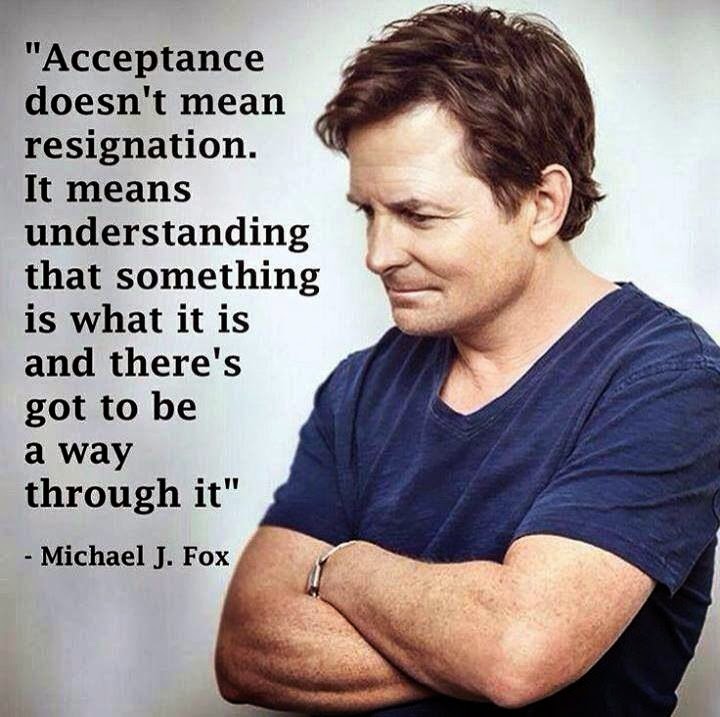
I feel a little discouraged today. Being out of commission for an entire year feels like yet another setback for me. Still, I am a lover of words of wisdom, so whenever I feel defeated by the bulk of changes in my life and despair of anything ever working out, I defer to this quote:
 When I was watching Family Ties in the 80's,
I never would have guessed that Michael J. Fox
was ever going to be such an inspiration to me. 


Saturday, September 6, 2014

What Do You Do With a Broken Brain? Part II

Each brain is unique, but there are some things all Traumatic Brain Injuries have in common: The Neural fatigue, memory issues, processing difficulties, and the fact that with the right conditions the brain can heal itself drastically within the first few months following the accident and continues to heal itself more gradually as time passes. That's why all the restrictions the first six months.

People bring different strengths and weaknesses to the recovery process. One way of looking at differences in people is to look at their ability to solve problems. Psychologists use IQ tests to measure this. A 100 score is an average score. Supposing I had a 130 IQ score (smarter than 99 out of 100 people), then dropped so that I have a 100 IQ (smarter than 50 out of 100 people), I still get to contribute to society in noticeable ways.
(Although when I consider my older sister, whom I think once tested at a 46, she contributes more than her fair share to society in that from her I have learned tolerance, patience, kindness, compassion, that it's okay to ask for help sometimes, that hard work and determination can help a woman with an IQ of 46 to learn how to spell her name and work a job. That a smile can brighten the day of anyone around you, and often paves the way for acceptance and mutual understanding between you and a stranger. As they say, no one is ever a stranger to her, and I have seen some very mean and angry-looking people crack a smile when she announces her name and sticks out her hand for them to shake it. She's braver and stronger than I am, and I don't think the fact that she isn't even intellectually aware of that is relevant at all). 
But in general, having a higher IQ tends to help in recovery because you're more likely to at least score
normally after brain injury rather than requiring Special Education, if you know what I mean. The neuropsychologist says that the trouble for me is that I realize I'm different than I was before, so I have a hard time dealing with it emotionally sometimes. I'm used to doing certain things quickly and easily. He says someone who had a lower IQ to begin with tends not to notice the little changes as much. In general, good grades in school is a promising sign of how well you can do. A college diploma is great because it shows that I'm used to getting and doing homework, learning new things and following through to apply them. The variable is whether or not I actually choose to do what needs to be done.

Some doctors say recovery takes 6-9 months, but that's from a physical standpoint. Neuropsychologists look at complex thinking and very subtle changes in behavior.They look for changes in thinking or memory. Research on these tests  that I've found indicates that for two years following a head injury there's evidence of improving scores. After the two years, they don't see large changes in scores. People don't stop getting better after two years, but the changes tend to be very subtle. For example, fatigue tends to be a long-term problem. From the second to the third year following the injury, people report their fatigue is less noticeable. Mine already feels much more manageable than it did even three months ago.

A lot of what brain rehab does is improve skills they can, and teach coping skills for what they can't change. Examples include memory techniques and organizational strategies. Basically, no one ever really "graduates." They learn the tools to continue with their own recovery. But people who get treatment do heal faster and do better on tests. 

Change is part of life. We're always changing. If you have your appendix out, the scar never completely goes away. When I was pregnant with Stuart I had an emergency c-section, and that cut through some muscle, so I'm never going to look like Jessica Alba on the beach (luckily, I did not look like her before, so I don't miss it any!) That scar is part of me. As we get older, some of our skills are less effective over time. We know we're not as strong or quick; our stamina or memory isn't as good as when we were younger anyway. If you ask, "Am I 100% of what I was at 18?", no one is. The aging process is gradual and happens over time. We learn to accept this as part of life. The unfairness of brain injury is that the change happens so suddenly, and it does throw your perspective off.

It's like running a marathon. A marathon is 26 miles; you can't sprint 26 miles. You have to pace yourself and keep as positive an attitude as you can along the way. When I worked for The American Cancer Society, I talked to a lot of people with some pretty extreme and devastating forms of cancer, and I know from that experiences that two people do not recover from the same version of that disease in the same way, nor in the same amount of time, but 100% of those people who have a positive attitude heal better and faster than those who don't. So maintaining a positive attitude is a survival technique.

Friday, August 22, 2014

The Sequel


The first painting, to the left, I created during my Junior Year of High School. 
It's called "Shame."
The painting to the left was just finished last night, 
and it is entitled "Validation." 

Perhaps the most devastating aspect of PTSD is that the sufferer 
seems forever barraged by bits and pieces of the past
 from which their mind seems incapable of escaping. 
PTSD therapy, the coping skills related to that in particular, 
has a lot to do with using imagery to lessen or even eradicate
 the flashbacks and their triggers, so I decided
 to use imagery in my own fashion to combat a past state, 
a mindset that kept me frozen in time. 

Society is not judging her for being unique
 -- that's a sort of teen angst issue. 
And so Society wears a warmer, more encouraging visage. 
The woman on the beach who is hiding her face 
is no longer crushed by the weight of her own dark thoughts. 
She breaks free of the position that she's held for so long,
 reaches out her hand, and reconciles with her past. 

I paint my perspective.
I dip my paintbrush in empowerment.
I spread all my hopes and aspirations across the canvass, 
colorful and unique.

Each brushstroke covers my past 
and all my fears and worries
 transform into something beautiful, 
something that's part of who I am as a person 
-- a gift, a little miracle, that I can never lose.

Monday, August 18, 2014

Painting in the Moment

I'm starting a portrait series to advocate for mental health awareness. It's one of those bursts of inspiration that comes from inside and out, a strong conviction that this is what I need to work on right now. I've always been most strongly inclined to address issues of social justice and human rights, and yet the paintings always end up kind of more beautiful than they are tragic. There is something so beautiful and powerful in how our weaknesses develop into our greatest strengths, how over and over again the message is that all things can become new that grow toward the light, beauty from ashes.

I've been a little sad and fearful tonight of all the things I think I'll never possibly get done, or may never again do, but as I've been trying to focus on the things that I can, and am, doing right now, I feel lighter and more at peace. This is what's made a writer of me: It's the only and the best way that I have ever been able to think. My thoughts and feelings get out into the light of day, and from there I see the fear is clearly just a shadow falling back behind them underneath the rays. Have you ever noticed how fears are like that? They seem HUGE and Insurmountable as we dwell on the past and worry about our future, but in my experience less than 90% of them turn out to ever be true.

I am re-learning daily to live in the moment.

Telling the Stories is Enough


At the Methodist Church here they have been doing a series on living more simply, and I've had a lot to say on the subject. I have no money or home of my own right now, and I'm grateful my sister moved back to Michigan at just the right time that I wouldn't have to be alone in all this. I've been thinking about how the accident has forced me to cut back on all my busywork and focus on the bare essentials -- diet,exercise, family, and emotional health. Normally in the summertime I'm with my kids, and it's a race to do as many fun activities as we can possibly squeeze in before summer ends abruptly on us (It always seems abrupt no matter how prepared we think we may be at the beginning of the summer). We run back and forth to the beach, have picnics, visit friends and family, go to the parks and the fun parks and hit every single museum within at least a hundred mile radius.
This summer, I have been limited to walks, painting, drawing, board games were pushing it a little, and no restaurants, stores, or any new activity that would overtax my poor tired brain. No reading, movies or TV. At first my kids were climbing up the walls, and I had to sleep a lot but spent many of my waking hours hard-put to keep them busy.
Worst of all, I wasn't able to read to them. As an educator, an English Major, and soon-to-be Reading Specialist, as a writer and lover of books, it has always been my goal to raise my kids to love words as passionately as I do. I read to them in my womb, and I read to them when they were babies. As soon as they were old enough to grab a book and crawl my way, dragging the book along and holding it up to me, I had a policy of always dropping everything I was doing and sitting down and reading that story to them, so that in their lives, no matter where they go, no matter what they do or how far they travel from me, whenever they open the cover of a book it will be as if my love wafts up from the pages, a feeling of peace and pure joy, and an internal voice whispering, "My mother loves me."

Even though they are the ripe old ages of nine and ten, before the accident I was still reading to them every night they were with me. It's our special time, a time when we snuggle up close and I share the words I read when I was their age, and I fall in love with the stories again as I see them through my children's wondering eyes for the first time. They can stop me at any point and ask me questions. If the chapter ends in a cliffhanger they might even coerce me with their enthusiasm to relent and read another chapter. I'm a sucker when it comes to cliffhangers, because I remember long nights in my own childhood where I couldn't wait to find out what happens next.
So this not being able to read to them business was a huge emotional issue for me.

We tried audiobooks, but then they couldn't stop and ask as many clarifying questions as they needed, and sometimes the voice of the reader wouldn't say something quite right, or at least not the way they were certain I would have read it.
I went to my sister and asked if she would be so kind as to read to us.
She smiled and said, "Who, me? You're the master storyteller in the family. Just tell them about King Arthur like you used to tell me and Bonnie."
I've never forgotten telling them those stories, and neither have they, but for some reason I had a reluctance to attempt this with my children, who have certainly been born into a more cynical age. And the subject matter... as a teenager I never thought twice about describing all the violence, immorality and downright terrifying aspects of the stories, but with my own children I had certain misgivings.

But my sister reminded me that those weren't the things that she remembers best.

What she remembers is that I modeled all the characters out of people in our family, with all our strengths and weaknesses, hopes and fears. What she remembers is a story about how someone tried with all their might to create a society of faith, peace, and justice -- and the tragedy in how our own crushing imperfections can tear all of that down. She remembers the funny parts, the parts that made her cry, and most of all the hope with which all the stories ended, a hope that if we remember that once someone came very close to having a world like that, then we as individuals should, and could, search our own hearts out and find the strength to fight for having a world like that. A world that never was but always should be. For although Camelot fell because of human weakness, still it did grow from dreams in our hearts to be more than what our flesh demands of us, to strive toward our greater purpose and to never give up on our visions of justice and peace, because it's not about whether or not it's impossible to create a perfect society: It's about what kind of people pursuing that kind of an impossible dream makes us into.

Anyway, that night I started to tell them the story, and I was pleased to find that I could remember a lot of it and that my brain isn't so addled that I can't keep it going fairly well. I struggle when they interrupt me with questions because my alternating attention is damaged, and that makes it very difficult for me to switch back and forth from one topic to another. Other than that, though, they responded very well.

The next day we walked to church. 
Now, a word on this pursuit: I was raised Baptist and lived under the harsh and impossible Rules of a Judgemental and Punishing Greater Power for many years and, after my church "family" predominantly abandoned me as a horrible sinner beyond all redemption, I went seeking a more realistic spiritual focus. I like the Methodist Church because they stress actually doing things for other people with less of the judgement and superiority. This church in particular, is surprisingly liberal for a religious organization, and I happen to love that the best piano player I have ever heard attends the church and just happens to have a life partner of the same sex. It gives me a tiny bit of hope for the world, because I'm a hopeless idealist for lack of any other options to help me to keep getting up mornings when there's nothing on the news but the latest conservative lies that spread hatred around like fertilizer. I'm looking for a lifestyle, not a pulpit. But I digress...
After church, when we were walking home again, my son Stuart started whining "Mom, I'm bored!"
And sweet little Lucy said "Momma, can you tell us what happens next in The Story?"
So, with a little reminding from them, I picked up the narrative from where we left off, and I told it to them all the way home.

I made them their lunch, and we did the dishes, and then I said, "Okay, guys -- Now we can do whatever we want: We can go play Bocce Ball in the front yard, we could paint together some more, we could play a boardgame if you can read me the directions---"
Stuart interrupted with "I want to hear more of the story, Mom! Can you please please tell us what happened to Gawain? Did he find the Green Knight again? How does he beat a guy who's a giant and can cut off his head and carry it around like it's a beachball?"
I was delighted.

We settled down on the couch and snuggled under some fuzzy blankets with drinks and snacks, and -- I could hardly believe it- two hours later I was still telling the story, and they were still laughing, asking questions, telling me what they thought should happen next, what they hoped would never happen, which characters they liked and why, and begging me to skip ahead because they were so worried about the ominous foreshadowing drawing into the story like a stormfront.
Looking at my children's faces that afternoon, I found myself thinking warmly that in many ways I have more than enough.