Showing posts with label Teaching. Show all posts

Sunday, November 22, 2015

Lazy, Hypochondriac Old Brain Anyway!

I'm not sure how much I shared with you about my Independent Evaluation, so I'm just going to hit the highlights and then tell you about the results that came in the mail yesterday: 

  1. The Doctor preforming my Independent Evaluation only talked to me for about five minutes.
  2. He made a show of being personable for a moment, but then he developed a patronizing tone and asked me about four questions, and those were very leading questions. For example, when he asked me what symptoms I was still "claiming" to have, and when I started by saying, "I've improved a lot, but --" he cut me off before I could really tell him what lingering problems I'm actually still having. It was as if "I've improved a lot" was all he really wanted to hear.
  3. He glanced over the shoulder of his testing guy to skim whatever notes they had on file for me and said he remembered me and something about my not having a significant injury at all. This troubles me because I have records from Urgent Care,the ER, my neuropsychologist, my primary care physician at the time, and the entire staff at the brian rehabilitation center. Surely all these people, who have certainly seen me more frequently and gotten to know me quite well, all these people can't all be wrong?
  4. Another thing that Dr IME said that bothered me was that I'd had pre-existing anxiety, and that "people like me" can sometimes make something out to be a much bigger deal than it actually was, that "people like me" exaggerate their symptoms when they're "shaken up." I resent the implication that I'm just overreacting because I've got some kind of a mental issue instead of a very real physical injury that is temporarily holding me back. Even he in his earlier report had had to admit that I was experiencing some difficulties. Did he make that up? It is offensive and bigoted to use my past experiences and counseling as excuses not to help me get my life back in the wake of my car accident. That I went to counseling for anxiety in the past was a healthy decision on my part -- It eliminated the problem. That shouldn't be used against me now. 
  5. I started to tell Dr IME that I can't spell as well as I used to be able to do, but he interrupted me and said that I had had high scores in spelling when I took the last test with him, over a year ago. I didn't care for the way he blew off my concerns and didn't let me finish my sentence, or even to tell him anything more. I had to take that spelling test again this time with his assistant, and it was pretty easy, but you must understand that I taught eighth grade spelling. I was an English Major and I read a lot. I had and have a huge vocabulary -- and that now when I'm writing I often stare at a word and no longer have any clear idea if it is correct or not. I'm glad that I passed his test, but that doesn't mean I can go back to teaching kids to spell. My ability to think on my feet is gone, and I could never keep track of an entire classroom of kids with the attention span I have now.
  6. Dr. IME wasn't interested in getting to know me or in finding the truth about what's been going on. He got the information he wanted and he walked out without asking me if I had anything more to say. I know I should have been more assertive, but that's hard to do when someone is making unfair assumptions about you. It's very intimidating.
  7. When they (whoever they are) sent me the letter telling me the date and time to be there for this IME, the note said that I could expect to be there for between four and eight hours, and to bring a snack. It took about three hours. I get kind of competitive about those tests, even though the only thing I'm actually competing against is how my brain was just after the accident -- because really it's what my brain was before the accident that I want to see again. I did the best job that I could do, and the result was that somewhere toward the end when I was doing the one with the shapes and colors on the computer screen, I was starting to have a really hard time keeping my eyes open and my head up. That's neuro-fatigue, which is one of my major problems, and I don't think Dr IME could see whether or not I have that problem when he was only there for five minutes, and I don't know if the guy testing me knew to look for it or not.
  8. I guess my frustration with the doctor besides his unprofessional attitude is that he didn't seem to be testing me for any of the types of things that are actually still difficult for me. Spelling isn't such a big deal. We have spell correct these days.I can't teach the subject anymore if I mix up words like "Chores" and "Choirs" a lot now, because I wouldn't be able to tell on the spot or in the spur of the moment how to spell any given word. Or maybe one day I can. I spent $100,000 on a teaching degree -- I was two classes away from getting my Master's Degree. I resent that this stranger would accuse me of faking or psychosomatically exaggerating the seriousness of my problem. Why would I do that? I'm not getting any kind of settlement for what happened to me, and if I could go back to work full time I wouldn't need therapy or any money. I spent all that time and all that money on that career because I loved teaching English and I couldn't imagine doing anything else with my life. It's killing me that I can't teach anymore. It's discouraging, but I'm doing the very best I can to follow through on all my therapy so that I can hopefully one day still go back to teaching full time. That's what I want. That's the goal. 
  9. What about balancing my check book or keeping my things organized and where I can find them? What about being able to cook without accidentally putting in too much of one ingredient, or burning something, because I get distracted and lose track of what I'm doing? How will I do at paying my bills? How can I find a place to live on my income with the few short hours I can work before I'm too fatigued to keep enough hours to pay rent? How can I drive when I'm so easily distracted? I'm waiting on the answers that the IME doctor either could not test, or did not to test, and all the while I'm aware that when people think of brain injury they are never picturing a woman like me who can still write beautiful, well-reasoned arguments and works as an office assistant. They don't realize all the little things that turn into big things.They aren't looking very closely because they don't know what it is that they're looking for. Well I can tell you, one of the things that they can look for is whether or not a shape and color test on a monitor should be exhausting after only three hours. Dr IME didn't stick around to see that. Are there tests that he could do that would test fatigue? Does he have tests about abstract reasoning or decision-making? Are there tests of how memory is affected when I do different mental tasks for different periods of time? Can he test how well I am organized at home, or how I stay on task and successfully complete tasks around the house when I'm distracted? It seems to me like a lot of my problems involve things that there are no standardized tests for, but I'm not a neuropsychologist and I  hope that I'm wrong, or that the insurance company can take into consideration what my family is seeing and what my therapists see.
Before this happened to me, I would never have realized that a person with a high IQ could be in a car accident, suffer a brain injury, and then only have some small part of their brain damaged in such a way that they can still walk and talk as they always had.I always kind of assumed that brain damage meant the entire brain. I wouldn't understand how a person with an IQ of 145 could possibly also struggle with every day decisions, understanding conversations, recalling things in the right order, and various other little changes that only those who know me could notice are missing -- or everyone who talks to me, when I happen to be overtired.  My boyfriend met me after the accident, and it's nice because he doesn't miss how I used to be, doesn't know how I used to be. But even he can see that mental exercise tires me out, and that when I'm overtired I stop thinking clearly, stop remembering words that I'm trying to get out, and start saying things that I didn't intend to say, like chairs instead of choirs. But then that's brain injury -- It makes sense. The part of my brain that's injured makes logical reasoning difficult for me, especially if I'm trying to solve something mathematical in my head, or faced with something new that I don't know how to approach. But the part of my brain that is not injured is still well above average, and gets ideas on a page faster and more clearly than most people. So I'm very fortunate in that, so I've been using that part of my brain, using my strengths, to explain to Mr Insurance Adjuster why I believe I still need to complete my therapy despite Dr IME's assumptions. I can only tell him the truth and hope that he is willing to see it proven.
The results of the Independent Examination were mailed to me by the Insurance Adjuster who sounds like a stuffy-nosed high school kid. What he wrote serves as sort of a cover letter for IME Report from the Dark Side. In it, the insurance adjuster states that my doctor's nemesis has determined that I should be completely done with brain therapy by the end of the year. He advises that I "should continue with my 'psychotherapy' at Community Mental Health for the same time period. However, any further treatment beyond two months" would likely be related to my "pre-existing conditions of both anxiety and depression."
Mr Insurance Adjuster advises that I share this report with all of my doctors and therapists, so that they can form rebuttals to these statements "if they happen to disagree with the medical opinion of Dr IME."

Oh, it only gets better from here.

First of all, in his opening summary of my case, Dr IME states that I am "well acquainted" with him, having previously seen him for all of five minutes almost two years ago.
I guess the extra five minutes he spent on me this time really clinched the deal. 
He points out that I was released on the same day of my accident and eventually referred to the neuropsychologist for testing and follow-up treatment. Once again, Dr IME stated that my doctor's "claim that there were two collisions and therefore two TBI's within that one accident" are merely guesswork, because there's no way my doctor could know that without having been on the scene at the time of the accident. 
This is bullshit, because it's right in my police report that I was hit by two different vehicles, which Dr IME would know if he'd bothered to do any research, or to remember my own description of the accident. He says that I probably suffered a little bit of amnesia for about two hours following the accident, and then went home with a mild injury to my brain. 

Dr IME details my doctor's recent observational evaluations of me from the TBI Group, particularly the time that my brother-in-law came in with me and we talked about all the issues I was having at home in relation to my TBI -- and then said that, according to his findings, these claims are not valid. Previously when he tested me, Dr IME says, I "had a full-scale IQ of 117 (87th Percentile)" placing my "overall intellectual abilities at the high-average range." This, he says, even exceeds his "premorbid baseline estimates," which just means how smart he imagines I might have been before the accident. Thank you very much for that vote of confidence, Doctor. I really appreciate it.
Continuing further, he says that I'm solidly average in almost all aspects, if mildly depressed, including executive functioning. He mentions that I taught reading for thirteen years, and I have no idea why he thinks that. I wish he'd asked me about it in person. It must have been from something I said the last time, because he certainly didn't ask me anything about my past this go-round. He notes that I was "well-kept and dressed appropriately," that my "conversational speech was spontaneous, fluent, and articulate." I did not appear to be depressed or anxious, and my "mood and demeanor were quite pleasant."
I wish his had been a little more pleasant.

The IME test results say that I've got a Verbal IQ of 120 (within the 97th Percentile), that my perceptional reasoning index is 105 (within the 63rd Percentile), which places my "overall intellectual abilities within the average range." 
Of note was the fact that in my auditory, attention and concentration, I show "a sizable drop from previous test results," in that my Working Memory Index score was only in the 13th Percentile. He says that previously I scored higher than that, and in the low average range for mental arithmetic. 

Test Break Downs:

  1. Verbal Intelligence: For detecting similarities, I scored at the range of a thirteen year old, in the 81st percentile, and in Verbal Comprehension of Information Processed I scored at fourteen, in the 91st Percentile.
  2. I Perceptional Reasoning, I scored in the 84th Percentile, too, and in Matrix Reasoning I scored... A nine. Thirty-seventh Percentile.
  3. My Working Memory was at an 8, the 25th percentile, and my Arithmetic's age-scaled score was 6, in the ninth percentile.
  4. My Processing Speed was that of an 11yr old, in the 63rd Percentile, and for "coding" I got a ten, in the 50th Percentile. 
  5. I got a high average in "fund" knowledge and abstract verbal reasoning, which basically corroborates my own doctor's recent findings that so long as I'm drawing from previous, predictable, information, I am very smart.  
  6. I was high average in spatial perception and average performance in nonverbal reasoning and visual-motor processing speed. 
  7. Mental arithmetic tested at the mild range of impairment "indicating the only isolated area of difficulty. Otherwise, intellectual test scores are solidly normal and often well above average, particularly areas of verbal concept formation." 
  8. My memory is in the 45th Percentile, 
  9. Visual memory's in the 84th percentile, resulting in a Delayed Memory Index of 108 (70th Percentile), which places my overall memory and new learning capacity at the high-average range." Yay! Hence my job success. :-)
  10. He claims my fine moter is "fine" (LOL), which directly goes against the findings of my own doctor, the doctor who administered my original neurological testing, and my current Occupational Therapist. And besides all this, the man only spoke with and observed me for five minutes. His young intern did the testing.
  11. Then he had me do a "set of academic achievement tests. I scored at a twelfth grade level in reading and spelling, and an 8th grade level in math (25th Percentile).
Oh, how the mighty have fallen!
Kidding.
I never was very good with math, and it involves an area of reasoning that is now damaged, to boot. 
Now, as my boyfriend, being a social security disability attorney, pointed out, is that I can't score in the high average for verbal intelligence and then have a 15 Point drop in Perceptual Reasoning unless I've got an actual brain injury, just as my other doctors and therapists have said. 
I can't process verbal information within the 91st Percentile and then score only in the 77th Percentile in spelling. For one thing, verbal intelligence isn't in the same part of the brain as spelling. Spelling involves sequencing, which takes place in the temporal lobe and, based on all my symptoms, my temporal lobe is damaged. Last week my doctor told me that, by his recent tests, expressing things verbally is easy for me, aloud or in writing, too, but that I don't remember what is said to me out loud in the correct sequence, and that it's this that is adversely affecting my communication with close friends and family members.

Going back to the IME report, the doctor does recommend that I should continue keeping a written daily schedule in a planner, but that otherwise the "subjective complaints voiced not only by [me], but [by my] healthcare professionals, seem to be more within the realm of attentional. I (the independent evaluator) would recommend continuing with the use of structured daily schedules, daily to-do lists, and other strategies to help her organize and centralize information." 
Duh.

The only test given to me regarding executive functioning was the "Trails Test," which is the same old dot-to-dot test that I scored badly on the first and second time I took it. It involved alternate attention in connecting some numbered and lettered dots in order -- from "1" to "A" and then from "2" to "B," and so forth. I've done that same test five times in the past year and a half. I now know exactly where to look. Hardly watching what I was doing with the pencil they provided, I was explaining that to the intern as I did it. All that made it into Dr IME's report was that I scored at a high average in that test as well.

But what the doctor did to me that I find most offensive of all is that, just as I had feared, he used my previous depression and anxiety as marks against me to confirm his findings. Thankfully it could not be denied that I "approached the test items in an open and honest manner," but his head-shrink test revealed that I have "The 'classic' Conversion V' often observed with individuals who do show a preoccupation with physical malfunctioning and a propensity to convert psychological and emotional distress into physical and medical complaints. They are often observed by others to be somewhat dependent.They do show little limited insight as it relates to the behavioral and psychological dynamics." 
All that said, he also found that my depression has had a "slight improvement" since the last time I took his test. 
He claims that I reported "moderate" problems with concentration and fatigue and mild problems with irritability," but that's from the last time I took the test, when I was still having difficulty even expressing myself discernibly, let alone relating well to my environment or anyone else who happened to be in it. 
Then he wrote that "I then administered two tasks of symptom exaggeration or dissimulation."
The man didn't administer shit -- All he did was asked me his four or five very leading questions about my current symptoms, interrupted me after I said I have improved and then tried to tell him what problems I was still having, and then he cut me off completely and walked out of the room. His aide administered the tests, and  I never saw him again, that day or since.

On the bright side, his head shrink test indicated "no objective evidence of feigning psychiatric or neurological disability," and that's in my favor. 

In conclusion, the IME Doctor gives his recommendations, which are as follows:
  1. Because I (he means me!) have only "very slight residual effects related to initial traumatic brain injury, which I (Dr IME) would categorize as being mild to moderate in nature. She is showing a very good recovery." 
  2. "There was also some exacerbation of her pre-existing history of depression and anxiety, and as such, I do believe that she does require perhaps two more months of rehabilitation with the Brain Rehabilitation Center to achieve maximum medical improvement."
  3. "Otherwise, I believe she will be then rapidly approaching her premorbid baseline level of functioning, which unfortunately included pre-existing history of both depression and anxiety. She is an appropriate candidate to continue with her psychotherapy at the Counseling Center."
  4. "I believe in two months she will be achieve maximum medical improvement and the counseling will then be related solely to her pre-existing conditions."
  5. "I see no need for household services or attendant care."
  6. "I believe Ms Hockin is capable of driving independently."
  7. "I do believe she requires some degree of offset as it relates to her disability, wage loss replacement as she is not yet capable of completing full-time employment."
  8. "However, I do believe there would be an advantage towards assignment of a vocational rehabilitation specialist to perhaps pursue in a more aggressive fashion, direct job placement as I believe she is capable of returning to full employment capacity in the next two months."
Meanwhile,the brain rehab has me waiting on Disability through the Social Security Administration, because none of them feel I would ever be able to preform full-time work again.
Even my optimistic neuropsychologist seems to be leaning toward my finding something else to do part-time within the realm of work that is already familiar to me -- just not teaching in a classroom full of students. He feels all too quickly I'd see the error of assuming that possibility. I still can't stop thinking that someday, some way...

It's confusing to be told that I'll be completely recovered in two months when in fact that's exactly what I want to hear -- especially since it just isn't true.
Basically what the IME Doctor is saying is (If I'm reading this correctly): "You're fine. Get over it, suck it up, get off your ass and get back to work!"
If I am fast approaching the full extent of my capacity for recovery, then I should be happy, right? He's put me into a position where I can't protest his findings without sounding like a hypochondriac who is too lazy to use Spell Check.

All I want is to teach, live in my own home, and be able to pay all my bills on time.
The IME Doctor seems to be saying that there's absolutely nothing stopping me from doing that within the next couple of months.
I hope he turns out to be right.
I think.


Saturday, May 9, 2015

Best Way to Keep a Secret is to Forget It

As you may know, I had the family meeting at the brain rehabilitation center this morning.
These meetings are SO uncomfortable, because each therapist takes turns around the table looking me in the eyes and gravely informing me of what we've already done and what we are going to do next, which feels condescending considering that I know what we've been doing, but one of them explained to me once that they do this for Thea's benefit, but then they direct the information at me so that I won't feel as if they're all  just talking about me over my head.
But people are all looking at me in these meetings, working out in their minds how I'm reacting to what everyone else is saying. Add to that Occupational Therapy and Independent Living to discuss, and it just got doubly embarrassing. 

For one thing, nobody on staff realizes how good I make myself look. I mean, I'm not trying to trick anyone by any means, because that wouldn't help me, but I try to do my best and put my best foot forward, and that's apparently created a great deal of difficulty from a therapeutic standpoint. I'm saying I'm fine and acting like I'm fine, but I'm beginning to get the impression that I'm not quite so fine as I've thought.
My neuralpsychologist has been telling everyone from the get-go that according to his tests I needed Occupational Therapy sooner rather than later, but things got all messed up when the insurance company began independent evaluations and the brain rehab went all feudal defense mode on me. 
Their reaction was in response to the auto insurance company denying me a case manager to help coordinate all the necessary services. Afraid the rest of their therapy wouldn't be covered, either, they simply told me that they'd do what they could to squeeze a little occupational information into my other therapies to help me out, but they also were all telling me "Occupational Therapy? Nah! You don't need that -- That's for people who are much worse than you!"
The doctor, meantime, continued to push for occupational therapy based on his testing results -- You know, because he presumed that three PhD's, a couple of Master's Degrees, and thirty years of experience from a highly qualified expert just might actually mean something. (He's somewhat of a Renaissance Man -- He's also a pilot, and likes to drive race cars, among eclectic other hobbies)

Without a case manager everyone just kind of dropped the ball. The doctor didn't get letters to people on time,
when a case manager would have badgered his office until they did. The brain rehab has randomly thrown various types of therapy at me based on my more obvious symptoms, and they didn't have a case manager to observe my situation to ascertain what therapies I still actually needed. Additionally, a case manager would have made certain that Thea and Paul got the attendant care and replacement care, which is funny because initially when Paul asked about it at the first family meeting they all acted like it was an unreasonable request, but now suddenly everyone is shocked that someone didn't see to that right away. A case manager is really just a sort of go-to person who makes sure all the records flow smoothly and the therapy is handled most efficiently. 

Coming toward the end of the meeting,  the Care Coordinator  said that since the Insurance Adjuster, is now much better educated on my case and being more accommodating, he's going to try again to put in for a case manager. "Obviously having one from the beginning would have been more beneficial," he said, "But it's still going to help a lot with keeping track of the OT-related and work-related therapies."
So they were all apologetic and embarrassed, and then was because they took out my sister's list and started asking questions about day-to-day things at home with the idea of transitioning me into housing. 
"And what's going on with this assisted living thing?" my sister asked. "My sister doesn't communicate well at all anymore. I only get part of an explanation for anything. She just came home from vocational therapy one day last week and was like 'I'm moving out now!'"
Everyone laughed at the way she said it, and my face started feeling really warm. "I didn't say it like that! -- Did I?"
"But you did," she said.
"Well, geese, I'm pretty certain I didn't use the term assisted living --Isn't that for elderly people?"
We are quite the song and dance show, she and I. Everyone laughed again, and the Vision Therapist cracked, "That's right, Heather -- We'll have you out playing shuffleboard in no time."
But my sister was on a mission, and would not be deterred: "I still have all these questions about whether or not that's a good idea, or how it's even going to work, because either she didn't think to ask these questions, or she didn't remember to tell me the answers."
"Well," the Vocational Therapist, "That will have to be determined by the OT testing. Provided your sister Qualifies for OT, there has been some talk of getting her into transitional housing."
"It would help to answer a lot of these questions that you emailed us before the meeting," the Care Coordinator added. "Before we can move on that idea, there will need to be some more evaluations by the OT, but the goal would be to get your sister out on her own again and see what she will and will not be able to do. Once we have a clearer picture of what areas she needs to work on, and have provided the education and support necessary, we would be able to gradually back off and let her go back to living her life."

"In the meantime," the Vocational Therapist put in, "the job at the call center is still in its infancy. We haven't got all the accommodations in place yet, and it's going to take some time to get enough data to see what she's really capable of. That said, we're only looking at about another three months of vocational therapy."

Three months is all the time they think I'm going to need to figure out what to do with the rest of my life?!
Back down, -- Don't catastrophize it, and don't assume you've got to have everything all figured out at once...

"Right," said my sister, "I've got a question about that: Am I right in my understanding that Heather is never going to be able to work full time again?"
I broke in with "No! Over time, I should be able to get back to teaching again, right?"
"I'm only repeating what you've told me," she said defensively.
"I didn't say that -- did I?" I was focusing on her face and feeling too mortified to turn back toward the rest of the table, but as soon as I felt my time spent in that position getting conspicuous, I made myself look back at everyone else, particularly the Vocational Therapist across the table from me. "I know I can't go back to teaching full time right away, but I am going to do that eventually, aren't I?"

All of a sudden nobody was looking at me anymore.
The therapist shook her head at me, and as she did so everyone else started kind of shaking their heads, too.
"I think you need to start accepting the fact that even if you do start teaching again, you're only going to be looking at part time work. It doesn't always have to be as few as twenty hours; it could be as much as thirty hours, but you need to be realistic about what kind of a job will be a good fit for you. You're going to have to settle for something much more simple, that isn't so taxing on your brain that you end up too exhausted to function properly."
I stared around at everyone, then put my elbow on the table and rested my head against my hand, looking down mostly just to conceal part of my face by my hair so I could feel less exposed for a minute. 

The psychologist in residence for the brain rehab, went down my sister's list and asked her some clarifying

questions. I suddenly understood why they always look me in the eye and address me directly about all the information we've already gone over, as opposed to looking at and discussing it with her -- Once the spotlight was off me and they were talking to her about things, I felt as if I were sitting at Parent-Teacher Conferences with Mom having all the people around me talking about my behavior and overall performance -- Worse, it felt more like when I was specifically sitting in on a conversation with any given one of my math teachers -- "Well, Heather appears to be very bright and she is working really hard, but for some reason she just isn't quite hitting the mark. So long as she just keeps asking questions and giving it her best shot, I'll give her a 'D,' as opposed to giving her an 'E' and failing her altogether..."'
No joke -- Every teacher who has ever taught me math as far back as the first grade -- and I've got report cards to prove it. ha hah

I listened to part of of the list and tried to understand exactly what has happened to my life. It seems so surrealistic, that I could be in a room full of people who were basically telling me that the life and career that I've been working so hard for so long to achieve for myself is simply no longer possible. I've spent so many years planning on that permanent teaching job and believing that if I worked hard and didn't quit, I could accomplish it, I don't know how to keep putting one foot in front of the other without that finish line in place. I was having a hard time wrapping my head around that in and of itself, and yet at the same time I had to struggle to focus on the conversation going on just over my head so that I wouldn't continue to be in the dark.

 List of Things That Have Changed Since I Was In the Accident/Since I Started Back to Work:
  1. I struggle to keep in touch with my children's teachers and with making sure they're doing their homework.
  2. I have a harder time getting the to mind me, and often if they get overly emotional I go overboard right along with them instead of being adult and taking charge of the situation.
  3. I'm inconsistent with my rules.
  4. When they come over they really trash the place, and I never seem to get around to having them clean up after themselves before they leave.
  5. Then I never get around to cleaning up after them after they're gone, so things have really piled up and gotten unmanageable downstairs.
  6. I'm very inconsistent in doing my chores.
  7. I'm having a hard time budgeting.
  8. I'm not keeping up with my laundry
  9. I keep forgetting to take my medications.
  10. I say I'm going to do something but then I get distracted and start something else, and then I get distracted and I start something else, and then I get distracted and I start something else...
  11. I'm not keeping up with my yoga or taking my walks. (And you know, this type of inactivity is usually attributed to depression, but I've been feeling far from depressed. Near-death experiences can sometimes do that for you, I guess. I mean, where there's life, there's hope, right?)
  12. She speculates on how I would do with planning meals for the week, getting groceries, and cooking. I think she's taking this to an extreme, because I do cook -- I've baked things for her and helped her with dinner. Frankly, I offered from the start to make some of the meals, and I made a list of things I would be happy to cook for everyone, but then they complained about the price of the ingredients (even though the kinds of things she buys and makes are mostly gourmet items) and eventually I stopped offering. The one time I did make a meal for everyone, no one liked it. And it's not like she asks me if I would please cook dinner. She told everyone at the table that unless she cooks breakfast, I won't eat anything but toast (What's wrong with toast?) and that when they went on vacation last summer and left me to my own devices, she has no idea what I ate the entire time (I think because I hadn't cooked very much of the frozen vegetables they left me, she assumed. I actually do have some friends around here who were happy to keep me company while they were gone, and that included eating out a couple of times. It's not like I was starving myself or living on only cheerios or potato chips).
  13. She worries about how I will get around, and pointed out that even if I were to get enough money saved to get myself a car, they're still going to be stuck picking up my kids because I won't be able to drive long distances (neural fatigue = accident)-- especially not with my kids in the car because of the distractions. And she's not being too hard or unreasonable on me, because these are the driving restrictions they plan on holding me to when I get back on the roads -- No radio on, no passengers talking to me, short trips only, no freeways, no heavy traffic hours --- It's such a long list, I'm not sure if I actually Can drive again or not!
  14. I used to have set rules and routines and structure built into my plans for my children on the weekends, and now I can't seem to think that far ahead.
  15. She wonders how I would do by myself with my kids, and what I would do in case of an emergency. I know what to do in case of an emergency!
"Well, are you afraid to leave her alone with the kids?"
"No, well, it's not like she's alone with them for long -- just about five hours on Sunday afternoons, because we go to different churches and then I come home and drive the kids back to their Dad's house,"
I felt really stupid listening to all this conversation going on around me, because some of it seemed absurd and entirely false, but so much of it seems almost as if it might actually be true. I'm starting to second-guess my own perception again -- mainly because of the direction this conversation headed in. These were all things I used to be good at once -- Even sister said so. (The "Bad" list was longer than fifteen items, I just don't know what all it had on it -- She never shows these things to me, and no one else is letting me in on the big secret, either. Or if they did, I just don't remember. Today, anyway. Maybe I'll randomly remember tomorrow. It's a horrible feeling when your own mind suddenly can't be trusted anymore. The doctor says that it's because of the specific area in the left side of my brain that's damaged. For months he's been pointing out that I've got roughly the same injury as Randy from the TBI Support Group -- Randy who reminds me of my eleven-year-old, who refused to listen to the doctor and get therapy, and instead went right back to work, Randy, who every week bemoans the fact that he'd thought he was "good to go!" and didn't know for years that his odd behavior that everyone was covering for at work was actually related to brain injury-- until it was too late, and he messed up so badly that he lost his job. As my sister keeps warning me: "Don't be a Randy!")

I was still trying to work out in my mind what they had been saying before they started reading the list. "Wait a minute, though -- I feel like I've been keeping this great big secret against -- myself? I mean, I don't understand what's going on. Why are we talking in terms of me having -- What? Like a job bagging groceries or something? The Doctor said that I could go back to teaching someday."

Thea shook her head at me. "You said that the last time you saw him, he was eluding to you getting part-time work. Remember? You came home and you told me that yourself." She looked across the table at everyone else and said apologetically, "She gets really excited about getting back to work and having a full time job and a car and being independent -- so much that she'll come home telling me that she's found the perfect job online, or she's going to go to the school and see if her friend Julie could help her get some kind of a job, or maybe she could teach online --" She shrugged, "And I don't mean to be a Negative Nellie, but I always find myself saying, 'No, you can't do that anymore --' and then she'll be like, 'Oh, yeah. Right. That's right. I can't do that because of this --' and then she'll go to her Tuesday night meeting and come back and say, 'The doctor said that I can't do this, and this, and this, and this is why!' -- And it's like the same thing I just told her, but it's like she keeps forgetting --"

I laughed self-consciously because I've been getting glimpses of this problem myself in the past couple of weeks. "I asked the Doctor about that this past Tuesday, and he told me to write up a description of my goals and the steps I need to take to reach them so that I can read it every morning (and I did so -- It's right here on the wallpaper of my laptop although occasionally I find myself altering it a little) -- I just get confused, because I feel the same on the inside. It's frustrating, because I know what I can do, because I've done it -- I've overcome so many obstacles in my life, and I've done it by just pushing ahead and not giving up --- I'm not quitting --"

"No one is saying that you are," assured the psychologist. I knew no one was saying that.

The Vocational Therapist said gently, "You know what you used to be able to do. You don't know yet what you can do, and you can only wait and give yourself the time to figure it out."

The Care Coordinator asked if I was getting in to see my counselor next week, and if I was starting PTSD
counseling soon, both of which were an affirmative. He said they're going to have to get me a case worker for sure to help me keep things straight, and I gathered the counseling question was his way of addressing the fact that I'm unable to accept reality from moment to moment. And I think I've given you the highlights of the meeting, anyway. It ran from 9:15 to 10:50, Thirty-Five minutes to tear down my life and make vague promises of refurbishing it. Or not quite so vague, I suppose -- I know that I might get help from a caseworker, and that when the Occupational Therapist is done with her testing of me, talk will begin of what steps I might be able to take next.

I'm having such a hard time accepting this idea that I can't take care of myself and have a full time job -- I'm used to thinking happy thoughts, faking it 'till I'm making it, working hard and expecting it to pay off. Now for the first time I'm seeing that in my new life hard work is somehow the opp
osite of what I'm supposed to do. It's like some kind of surrealistic paradox that I'm trapped in. I don't want people to feel like they've always got to take care of me. The brain rehabilitation center's goal is to help me be independent again. I need to continue to hang on and wait to see what that's going to look like before I start dreading it.
I need to -- what? 
Have faith.
All I know for sure is that I've got to have patience, and maybe to stop measuring my worth by the amount of money on my paycheck.
It's just scary because I don't want to spend my whole life struggling to make ends meet and not being able to help my kids get basic things that they need.
I want to crawl into a cave and sleep for a few months, but naturally I can't do that. I don't quit. I won't quit.

My boyfriend is planning on sitting in at the next meeting so he can help me keep track of the big picture a little bit, or remember to ask questions to help me figure all this out. I keep forgetting what I want to say and what I want to ask when I go to those meetings. I'm thinking having a social security/disability attorney for a boyfriend just may come in handy.
Seriously, my life feels like it needs to play on the Lifetime network -- Do they still have the Lifetime network? I haven't had cable in a very long time. ;-)

On the random bright side, I decorated my cubicle for the contest at work and everyone has been super impressed by how lovely my Japanese decor is looking, so I think I just might win! Calls were back to back today, but at least I had a pretty cubicle to look at while I was being exhausted and easily confused. My Team Leader is a really sweet, motherly woman whom I like a lot. I really love this job, and she was telling me how she started part time just as I am, and that gradually she worked her way up in the ranks -- She's been there for five years, and done just about every job available. I hear the benefits are nice, and I already know that the work environment is excellent. 
I guess part time work isn't all bad -- I can use the extra time for painting, once I've gotten my schedule all straightened out. It's all a matter of being very well-organized and disciplined -- those are the keys to my success.
I may have already misplaced them.


Keep thinking of me. I run on positive feedback and support these days -- and just sheer stubbornness as well.

Wednesday, February 25, 2015

This Is Not a Setback, Just a Delay

It has come to my attention that I have to go to work at a call center for what they call "work hardening" for the time being instead of going back to school and finishing my degree this summer as I wanted to do. I'm just struggling to accept "my new norm" again.
According to my neuropsychologist,I need to consider the following questions:
  1. How much work I can tolerate in a day, a week, and further?
  2. How long in each day before I am too tired to work? 
  3. How long in each day before I start making too many mistakes because I am overtired? 
  4. How will I handle the diverse and alternating attention required to work in a classroom? 
  5. How much extra activity and noise can I tolerate on a job?
  6. Can I learn my new coping methods to re-learn how to focus? 
  7. How quickly can my brain process and apply new information? 
  8. The doctor says that if I don't figure out the schedule and my limitations and abilities thoroughly enough, I will just be setting myself up for failure. It will take another couple thousand dollars to finish my degree, while meantime I am still struggling to the extent that the doctor and therapists can't say if I could successfully complete even the most basic aspects of the job I'm aiming toward. The question he and my family posed was: "Why get into more debt if it turns out that you will only ever be able to work part time at a much simpler position?" 
How did my nueropsychologist convince me to reconsider his prognosis and take it more seriously?

A dot-to-dot.
Using the dot-to dot that I've attached, the neuropsychologist re-tested my diverse and alternating attention, and I am still one standard deviation below the norm. I don't remember bell curves very well, but isn't that like the equivalent of getting a C or a D grade?
Even if it isn't really all that bad, I can't fill out a dot-to-dot correctly within any normal range of time. I take 10-15 minutes to do it.  
In the most recent attempt from last week, I made two mistakes. 

How this translates in my actual day-to-day existence:
  • If I am doing a dot-to-dot that requires me to alternate my attention from a number to the corresponding letter in the alphabet, i.e. 1 to A, then 2 to B, 3-C, 4D, etc, without making mistakes, then I can't drive a car safely because my attention is required to alternate between the speedometer and the front, side and rear-view mirrors, from the cars in front of me to the dogs or children who may dart into the road -- 
  • Even one driving mistake can be fatal, so it's not like I'm "only" making two mistakes, it is much more serious than that. 
  • The doctor is certain that another car wreck would kill me. 
  • He isn't saying I can never drive again, but he is saying that he thinks I would fail the test if I were to take it right now. 
  • At my volunteer position at the local elementary, if I get interrupted while making copies I mess up the directions for the copy jobs the teacher has lined up for me. 
  • If I have to correct anything that isn't fill in the blank, multiple choice, or spelling, it takes me twice as long as it used to. Actually, even spelling takes a little longer because I can't spell anymore, but at least the spellings don't change. 
  • If it takes me two hours or two days to correct twenty-six 5th Grade Reading Packets, how will I ever correct 130 Thesis Papers in a timely fashion?  
  • In a classroom, my attention has to be everywhere at once -- on students, the text, the technology, the clock, the announcements and bathroom break interruptions, the lesson plan, and what Johnny is doing over in the corner that has nothing to do with what he's supposed to be doing. 
  • This doesn't even account for the neuro fatigue that sets in whenever I do anything that requires any extra brain cells, such as making judgement calls while driving, or when correcting a paper. 
If I work at a job part time and flounder around, I can at least learn what I need to improve or develop new techniques to cope with any deficits. I then would have data to work from for future work-related goals. I will know if I can hack completing my degree or going back to a classroom, and I will know it more accurately than if I were just to continue as a volunteer doing all the easier aspects of teaching -- making copies, correcting papers, etc. Because, let's face it, if those are on the easy end of the scale, and I'm already messing those up, then I am not yet ready to move on to anything more complex.

And so, at the advice of my family and my neuropsychologist, I have to shelf college for the time being and focus on work-hardening to determine how much I can work, how I can work, and how long it takes me to work. I am not especially pleased, but people have been trying to tell me this for months now, and staring down that dot-to-dot again was the doctor's way of proving to me that they are making valid points. 

I can't do this based on positive thinking alone. It's going to take time and it's going to take a lot of hard work and determination. So I'll go work at a call center at a place that hires people with "disabilities," and see how I can do at that job. I will try my best to learn the job and have a good attitude, and I will set goals toward my future with the possibility in mind of still going back to college later on if I am able. I'm not quitting; I'm just shelving an idea until I can find room for it in my life again. 

And I will continue my painting because, so long as I can still do that, it is well with my soul.

Friday, October 10, 2014

Brain Matters: Should Insurance Cover the National Average, or The Individual?

When did my blog get hijacked by Traumatic Brain Injury and Depressing Divorce Songs? I'd love to tell you that this is not one of the two, but I'd be lying. I have something more I feel I have to write concerning TBI.

If you've suffered a Traumatic Brain Injury, you don't even know what you don't know. Not being able to trust your own mind is a scary and often frustrating experience, by and large because you have to listen to and trust the opinions of others, since nearly everyone, not even just the experts, can see and experience how you are doing so much more objectively than you can.

Initially I just had to go completely on what everyone else was telling me. For months as I did test might be wrong with me, or could be wrong with me, like that my Executive Functioning might not be up to snuff, or that my short-term memory was so messed up that I couldn't be sure if I'd just said something or not. For awhile, it felt as if I were carrying around every single last one of the symptoms in my head. In truth, there were many things that I knew were not wrong, but quite a few other things that I just wasn't sure of. It was like trying to step through the woods on a dark black night. Oof! Just ran into a tree.

Now that the last of my test results have come in, I am happy to say that I know a lot of things with me are great, although a lot of other things are not. My neuropsychologist is an idealist and champion of hard cases like mine. He is intrigued that I'm intelligent enough that I could drop down from a Verbal IQ of 136 to a Working Memory of 86, because that's a 47 point drop. If we were to liken that to the Average IQ of 100 and I dropped 47 points, then I'd now have an IQ of 53, which I believe would have meant an adult foster care home for me. This is what he means when he says that I'm so lucky that I'm smart.
But here is where the problem comes in: Although I was smart enough not to be rendered incapable of taking care of myself, I still have a brain injury, I have still lost parts of my mind that I was literally attached to. Many of my test scores state that I rank as "Average." I don't mean to be an intellectual snob, because there I don't have a brain cell to stand on, but my neuropsychologist doesn't think it's fair to leave me at average when I used to be so much more. I feel as if people with real problems everywhere will be disgusted that I'm so worried about this, but the man won't let it go. He feels passionately that the point of brain injury treatment can be likened to any other kind of injury in that, if I had broken a leg and went to the hospital for it, the auto insurance would happily have covered the cost of getting a cast and healing my leg to be as much like it had been before the accident as possible. Not so with brain injury. In cases like mine, where someone who is "really smart," gets into an accident, the insurance companies have a harder time believing that the person needs all the therapy it takes to get their brain back up to snuff. From their perspective, if the tests come back average, then there's no injury to be healed.

Since I want to concentrate on these rather than dwell on anything else here's a breakdown of my strengths:

I got Very Superior Scores in --


  1. Oral Information Processing. This means that I can now reason things out loud better than in my head.
  2. Vocabulary. Not surprised. I'd venture a guess that this wasn't damaged all that much, although it has to be said that I often can't remember words that I used to know. If I want to say that I'm "annoyed" by a remark, I don't automatically say that I took "umbrage" because all I'll be able to come up with is "annoyed." Yet I'm sitting there saying to whoever I'm talking to, "I know that there's another word for that! It starts with a "U," I think...Argh!" (I know, I know: Cry you a river, right?)
  3. Letter Fluency, in which I got a 98, but in Word Context I only got a 75, and in Repetition Errors, which was a similar test to Letter Fluency, I only got 50%. The inconsistency is due to brain damage. Now, maybe these are average scores, but the neuropsychologist says that I should have been Very Superior in all of these tests. He says my efficiency has taken a 48% drop! And I am not even getting into my mental health scores, because those are all skewed as well, resulting directly from the accident.
I got Superior Scores in -- 
  1. My General IQ, which is now only in the 77th percentile even though the neuropsychologist's
    sliding scale puts it at around 136 pre-accident. See what I mean, though? I'm not sure how upset I ought to be that I'm getting Superior Scores instead of Very Superior. They are just numbers to you, but to me they're every day things that I used to be able to do, like reason something out in my head instead of having to draw myself illustrations or talk out loud -- or to spell without having to use spell check. 
  2. My Right-Handed Tactile Form Recognition, but not my Left. On the right side I got a 90%, while on the left I got 19%. This, my friends, is due to brain injury.
  3. Symbol Searching and Word Reading are both tests that have to do with Information Processing. These two were Superior, but in most of the other other tests concerning Information Processing, I scored much lower. It's what the neuropsychologist calls "a diffuse issue," because the scores range anywhere from 94 (Very Superior) to 19 (Mildly Impaired). 
  4. He says that I'm good if I can lock onto one task and do only that, but as soon as you add any
    kind of multi-tasking, I get lost and overwhelmed. I see it every day when it takes me over an hour to do the dishes because I'm trying to figure out where everything ought to go, what order they ought to be in, and heaven forbid what other people are trying to say to me or what I'm wanting to mention to them, because I have to put my dishrag down and really listen, or talk, and not be doing anything else, or I will get confused. This is not my normal.
  5. In Visual Organization I was Superior at Perceptual Reasoning and Visual Puzzles, Matrix Reasoning, and the Hooper Visual Organization test, although I scored a Low Average
    in drawing a clock and Moderate-Severe drawing a bike from memory! I'm an artist. I'm supposed to be able to do these things. That is brain injury.
  6. Memory and Learning was actually all over the scale of score options. I got some
    Superior, High Averages, Low Averages, and Mild to Moderate to Severe scores. The tests range from being in the 91st Percentile all the way down to the 2nd Percentile. I am not joking, but I'm not officially discussing my Moderate-Severe scores yet. Superior scores would be anything visual that relates to memory. I can remember a picture I've seen very well, and recreate pictures that I've seen (Unless they are a bike, apparently). Did you know that the largest component that they use to determine your IQ is your memory? Well, mine is damaged.
  7. In Language. Thank God my brain didn't injure my ability to communicate much. I've got quite
    a few Superior Scores, but I've got a localized injury that doesn't affect my speech production.
    The Neuropsychiatrist says that only a highly intelligent individual could come out of an accident like mine and still be average in so many areas related to language production. Is this Good News, or Bad News? I think I have to make my own choice and put on those ruby
    slippers and let all the bad curl up and pull back under the house. I'm not in Kansas anymore. In Oz, people have been known to turn into The Wicked Witch of the West and think that my ability to communicate makes me unentitled to any assistance from Glinda the Good Witch... I am actually quite amused as I find myself visualizing my Neuropsychologist floating down in a pink bubble wearing a huge crown, with golden curls instead of his shiny baldness. One can only hope that he never comes across this description of him. Maybe he'd change is mind about my having superior intelligence.
  8. Under Executive Functioning, there's Verbal Concept Formation. These tests are half Superior and half Average. 
Well, at this point I think this entry is probably getting boring (Who really cares about all this besides me, my closest friends, immediate family, the neuropsychologist and my therapists?), so I'll skip High Averages and Low Averages and just cut to the chase with Mild and Moderate-Severe Brain Injury effects.

  1. Motor Function. My fine motor coordination is Moderately-Severely damaged, and my gross motor coordination is Mildly damaged. These do play into my driving skills, although currently the insurance company is fine with having me out on the road. 
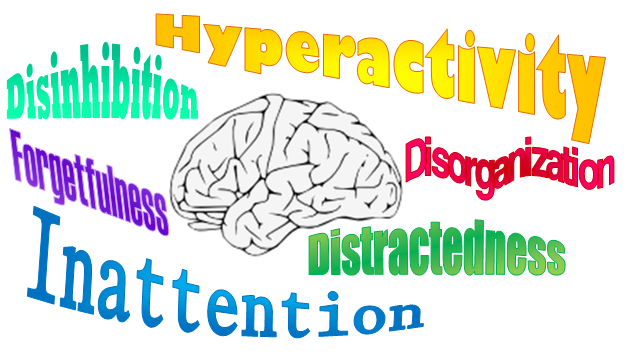
  2. Attention and Concentration. This is the worst of it. I thought I was joking when I said in a
    Symptoms of ADHD
    previous post that I'm ADD now, but I'm now officially considered ADHD. My working memory, symbol span, attention capacity test (8 standard deviations below the norm),  and visual ADHD scores are all Moderately-Severely damaged. Other areas are mildly damaged, such as my listening skills and spatial attention. Earlier tests all confirmed this information. Right now, I can not switch quickly from one task to another without getting lost in where I was. Tonight I was having that problem while on the phone talking to a man I've been dating. It's later in the day, I'm tired, so I kept losing my train of thought.
  3. Visual Organization. I touched on this earlier. I couldn't draw the bike or the clock from memory. In these skills I range from mild to moderate to severe.
  4. Memory and Learning. These are skills I need to finish my Master's Degree. My Logical Memory is Mildly Damaged, while my Visual Working Memory is SO low that I only got a 2% and a 4% ranking. It's all connected inside our brains -- the memory and attention and the eyes, etc. I find it fascinating at the same time as it is alarming. There were apparently perfect scores in memory tests where I had to remember certain patterns. Visual-Spatially I was very intelligent, but I scored as Mildly Damaged in recall testing . I scored a flat 16% across the board even though in the different tests I was supposed to have my scores move upward as I
    was repeatedly shown the same information. 
  5. Impairment Measures. My Neuropsychologist says that there is a set of tests that are very detailed and sensitive, acceptable by corporations and courts of law, one of which is called the Halstead Impairment Index, that I only did well on half of the questions/measurements (0.5), leaving me with a Diagnosis of Moderately-Severely brain damaged altogether despite what anyone else thinks, because a score of 89 functional IQ is not okay for me, is not my norm, and I should not settle for it. I am so conflicted about this. I've been trying to accept that I have a brain injury and that some of it is never going to come back, and the therapists all agree on that, but this man who specializes in the diagnosis of brain injury rather than just the treatment of it is telling me that it's not true that I have to settle for anything. He is fighting for me to get the best possible care, and he is the only one.
    Who is right? What is right for me? I don't think any of us are raised by parents who tell us to strive for averageness. It's always excellence that is the goal. It's really hard for me to be okay with this when I've got someone, anyone really, on my side who says that brain damage is brain damage, and it shouldn't be measured by anyone else's brains but against my own. 
  6. The Achievement Tests.Reading, Spelling, Arithmetic. They're all average. The Independent Examiner had me take all these tests, too, and he feels this is fine, whereas my Neuropsychologist says that the Independent Examiner "Doesn't 'get' that a highly intelligent brain like yours should not have to slow down to take timed 6th Grade academic tests."  ["Except possibly in Math," I would add.]
The final area of concern for me -- one that I asked for an explanation and clarification of how these
scores relate back to my everyday life in practical terms -- is my Executive Functioning. It's something my family and I have been worrying about all along. Just how altered is my ability to, say, manage my own bank account, do things independently, and reason out complex problems? On one test I scored Moderate-Severe. I made 60 errors when I shouldn't have made even 40 errors on that kind of test.Then there was a whole battery of tests in which I scored "Average," but my Neuropsychologist contends that they're "pedestrian" scores for a College-Educated High IQ." Gotta love a man who thinks so highly of my intelligence. It's quite touching, really. 

Another series of tests related to Executive Functioning were quite fascinating in that all my verbal right-brained comprehension scores were really high as compared to my non-verbal left-brained scores. I wasn't very efficient, but I did manage to get through those tests with average scores. The
one my sister has drawn an illustration of is labelled "Toddler Stacking Toy," because it is, and I was Mildly Impaired on that one. I remember it very clearly, because it was a toddler toy, and I had to really think to come up with the right sequences and strategies to stack them from biggest on the bottom to smallest on the top. This is probably my strangest test result of them all. I could not reason out in my mind how to get those stacked the right way following the rules I was given. The rules were: 
  1. You can only move one piece at a time.
  2. You cannot rest a bigger piece over a smaller piece.
  3. You have to get all the blocks to stack in the center, from biggest on the bottom, to littlest on the top.
I remember feeling embarrassed or almost ashamed that I couldn't do it as quickly and easily as I had expected. I was really sweating it out at one point. 

"What do I do about the fact that I was incapable of completing that 'Move-Accuracy Ratio" test?" I asked the Neuropsychologist concerning this stacking humiliation. 

He replied, "You remember that you have a much easier time with verbal reasoning than non-verbal reasoning, so when you're trying to work something out, you benefit by running it by your sister or another trusted friend or advisor."
This is actually something the Cognitive Therapist has been having me do. I feel stupid when I'm
doing it with her, because she'll have me playing a game or working out a puzzle and I'll have to tell her out loud what I am working on and why I am doing it the way I am, what order I'm planning to go in, and how I'm going to keep track of where I left off if I get interrupted. To me it feels as if I'm moving my lips while reading. I think of how ashamed students are who have to do this in the higher grades, because it marks them out as poor readers immediately. Just now, as I am typing this, I suddenly understand those students so much better. They have to read out loud to visualize and comprehend what they're reading.
They are like me.
It doesn't mean that they're not intelligent.
It just means that they process information differently than the majority does.
I am going to be one bad-assed teacher once I get through all of this and get to teach again!

Ultimately, it doesn't really matter what the Insurance Company thinks, my family thinks, my friends think, or even what my Neuropsychologist thinks.

  • Ultimately, this is all just statistics and labels. What I can and can't do is all up to me.
  • This experience will make me a better teacher.
  • So memory and learning are going to be a little harder, so what? Because I am a teacher, I know how to learn new things. I can apply what I'm learning to my life.
  • I've gotten quite a few Special Education credits, and credits for a Reading Specialist endorsement. What I have found in these studies is that the strategies that help students with special needs are strategies that would help anyone. I'm not ashamed to use them. I'm starting to test them out myself. That's just good teaching. In general I would advise that you never ask someone to do something that you wouldn't also ask of yourself.
  • I am strong enough and smart enough to figure out what I do and do not need and believe.
  • Do I want Justice done? Yes, but if it doesn't happen, I can learn to be content with what I've got because whatever it is, I am not average in any way that matters. Ask anybody who knows me and they'll tell you.
  • My reality is valid. I'm the one stuck wearing the ruby slippers. I have to walk my own way home before I can learn the lesson from this strange and interesting journey.